
Everything you need to choose, protect and style floors that last.
This guide explains how to pick the right flooring for each room, keep floors looking new for years, and use tile creatively in modern designs. We cover hardwood, LVP/laminate and porcelain/ceramic/mosaic tile so you can compare performance, maintenance and design options.
Choosing the Right Flooring for Your Space
Selecting the right floor starts with function, not fashion. Match material to how the room will be used, the moisture and wear it’ll face, and the look you want to achieve.
1.
Define how the room is used
- High traffic / kids & pets: Choose durable, scratch-resistant surfaces (LVP or high-grade porcelain). LVP is often waterproof and performs well in kitchens and basements.
- Wet areas (bathrooms, mudrooms, outdoors): Prefer waterproof options — porcelain tile or quality LVP; avoid solid hardwood in consistently wet areas.
- Living rooms / bedrooms: Hardwood or engineered wood provides warmth, comfort and resale value. Solid hardwood can be refinished; engineered can be used where moisture control is a concern.
2.
Assess technical needs
- Subfloor & moisture: The subfloor condition and moisture level determine suitable products. Installers must inspect flatness and moisture and recommend remediation when needed — this step prevents callbacks and prolongs floor life. Professional subfloor inspection and prep are non-negotiable.
- Installation method: Hardwood may be nailed, glued or floated; LVP and laminate commonly float or glue; tile needs proper underlayment, mortar and, for some projects, a mud bed. Each method has different prep needs and implications for movement, sound and comfort.
3.
Narrow material & style
- Hardwood: Timeless, refinishable, best for dry living areas. Choose species (oak, maple, hickory), board width and finish based on traffic and style.
- Laminate & LVP: Budget- and performance-driven choices. Laminate mimics wood at low cost; LVP offers waterproof performance and realistic embossing. LVP comes in SPC/WPC rigid cores or flexible constructions — pick based on subfloor and usage.
- Porcelain / Ceramic / Mosaic: Extremely durable and versatile. Porcelain is dense and ideal for wet areas and exteriors; mosaics are decorative and slip-friendly for shower floors.
Practical selection tips
- Test samples at home. Always view samples in your own lighting — color and sheen can shift dramatically between showroom and home.
- Think long-term. Factor refinishing, warranty, and lifecycle cost (not only purchase price).
- Ask about acclimation & warranty. For wood products, acclimation and manufacturer-compliant installation affect warranty validity and long-term performance.
Flooring Maintenance & Longevity Tips
Good maintenance dramatically extends the life of any floor. Below are material-specific best practices and general routines.
- Sweep / vacuum regularly to remove grit that causes surface wear.
- Damp mop with a manufacturer-approved cleaner; avoid harsh chemicals or abrasive pads.
- Protect high-wear zones with rugs and use felt pads under furniture.
Material-specific care
- Cleaning: Use a damp (not wet) mop and hardwood-safe cleaners. Avoid steam cleaners.
- Preventive: Control indoor humidity (35–55%) to limit wood movement and cupping. Refinish solid hardwood as needed; engineered with thick wear layers can be refinished once or twice.
- Cleaning: Dry or slightly damp mop; avoid standing water and steam cleaning. Choose high-AC rated products for durability. Professional installation and proper underlayment increase lifespan.
- Cleaning: Most LVP is waterproof — safe for damp mopping. Use gentle cleaners and avoid abrasive scourers. For rigid-core LVP, ensure transitions and expansion gaps are maintained.
- Cleaning: Sweep and wet-mop with mild detergent. Grout benefits from periodic cleaning; natural-stone mosaics may require sealing. For wet areas, verify that waterproofing and grout choices match traffic and exposure.
- Address scratches/chips promptly. Small wood scratches can be touched up; deeper damage may need refinishing. Tiles: replace cracked tiles and re-grout if necessary.
- Schedule professional inspections. For hardwood, consider a pro for refinishing cycles; for tile, check grout and expansion joints annually.
- Prevent moisture damage. Manage leaks and spills immediately; for basements, verify moisture barriers before installing LVP or engineered wood.
Tile Trends & Design Ideas
Tile remains one of the most versatile design tools — contemporary collections combine durability with striking looks. Here are current trends and practical ideas for using tile creatively.
1.
Large-format & minimal seams
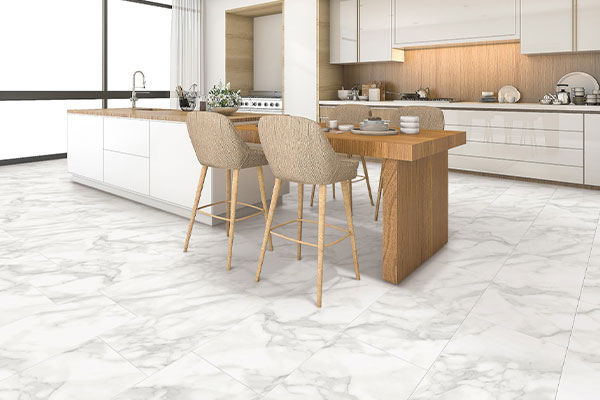
Large-format porcelain (rectified edges) allows for minimal grout lines and a seamless aesthetic that resembles poured stone or polished concrete. These slabs create a modern, expansive feel and are especially popular in open-plan homes. Porcelain’s technical advances make it suitable for floors, walls and exterior cladding.
2.
Wood-look tile & hybrid aesthetics
Porcelain planks that convincingly mimic hardwood combine the look of wood with tile’s durability ideal for wet areas or busy kitchens. These allow a consistent visual flow between rooms that require different performance characteristics.
3.
Mosaic accents & mixed patterns
Mosaic tiles remain a go-to for decorative backsplashes, shower niches and feature walls. Mixing mosaic inserts with larger field tiles adds texture and visual interest without overwhelming the space. Consider metallic or glass mosaics for a modern luxe accent.
4.
Patterns & geometric layouts
Herringbone, chevron, and offset brick patterns keep returning in popularity. Large tiles laid in creative layouts can change perceived room proportions; smaller mosaics can emphasize scale and rhythm in a bathroom or entry. Designers combine pattern, grout color and texture to craft custom looks.
5.
Layered materials & transition styling
Mix tile with hardwood or LVP intentionally: define zones, create durable wet-area islands, or use tile as a hearth or entry accent while maintaining warm wood elsewhere. Thoughtful transitions and thresholds help unify mixed-material schemes.
Design checklist for tile projects
- Pick grout color early — grout greatly influences the finished look.
- Plan expansion joints & transitions to avoid cracking.
- Select the right slip rating for wet areas (bath, pool surrounds).
- Hire experienced tile installers — large format and rectified tiles require precise substrate prep and grout techniques.
Areas We Serve
Kitchen Designs Group is proud to serve homeowners throughout the Southeastern United States, with many cabinetry projects in:
- Marietta, Georgia and the greater Atlanta Metro
- Santa Rosa Beach, Florida
- Panama City Beach, Florida
- Nashville, Tennessee
- Augusta, Georgia
- Dallas, Texas
- Austin, Texas
- North Carolina
- South Carolina
- Alabama
If you’re outside those areas, reach out—we may still be able to help or refer you to trusted partners.
Book a Flooring & Tile expert
Want help deciding? Book a Flooring & Tile 101 consult and we’ll bring samples, inspect subfloor conditions and create a care & maintenance plan specific to your materials.