
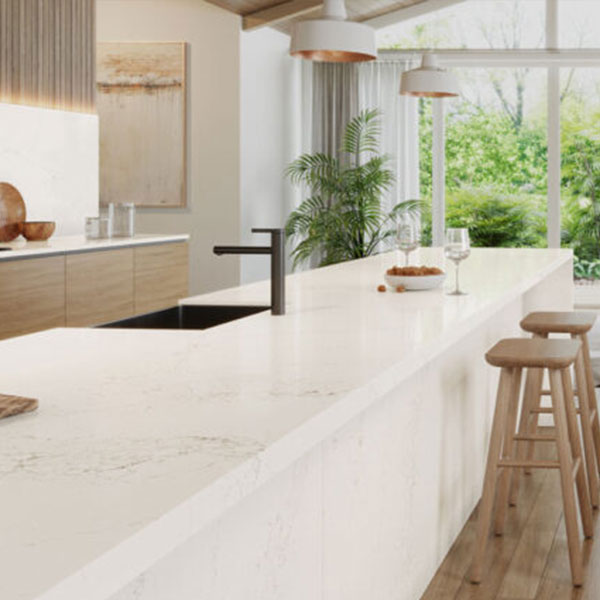
Countertops Products
How to pick a countertop
Compare quartz, granite, marble, quartzite, porcelain, and Cambria quartz to find the best surface for your project. Learn performance differences, maintenance needs, and schedule a material consultation.
Countertops are the visual and functional heart of a kitchen. Pick a surface by balancing style, durability and lifestyle: consider how you use the kitchen (heavy cooking, kids, indoor/outdoor), the finish and color you want, and the maintenance you’re prepared to do. We help clients through material sampling, templating and fabrication planning so the chosen surface looks great and performs long-term.
Cambria Quartz — Preferred Partner
Cambria is a premium, American-made quartz brand offering signature designs, deep colorations and manufacturer warranties.
- Design & performance together. Cambria balances natural-stone aesthetics with engineered durability and brand backing.
- Trusted, branded selection. For buyers seeking a recognized brand with consistent quality and showroom support.
Where it excels
Homeowners who want engineered stone with strong brand assurance and design-forward patterns.
Care
Treat like other quartz: clean with mild soap, avoid extreme heat, and follow Cambria’s care instructions and warranty guidance.
Faucets & Sinks match and function:
Countertops and sink/faucet choices are a system pick components that match material, use and style.
- Undermount sinks – Sleek, seamless, and easy to clean. Ideal with stone slabs because the sink rim is hidden under the countertop.
- Farmhouse (apron) sinks – Bold statement, deep bowls and a traditional feel pairs well with furniture-quality cabinetry and islands.
- Vessel sinks – Sculptural bowls that sit above the counter often used in bathrooms to create a focal point.
- Touchless / modern faucets – Offer convenience and hygiene; great for busy kitchens. Modern faucet options (pull-down, commercial style, touchless) come in many finishes to match hardware.
Quartz
What it is?
Engineered quartz is made from natural quartz crystals bound with resin and pigments. It’s an engineered product, which allows consistent patterns and a broad color range — including convincing marble looks and ultra-consistent solids.
- Low maintenance. Non-porous and usually doesn’t require sealing; resists stains and bacterial growth.
- Design flexibility. Available in marble-style veining, subtle specks or pure solids great for modern, transitional and classic kitchens.
- Consistency. Because slabs are manufactured, you get predictable color and patterning across slabs and projects.
Busy family kitchens, bathrooms, islands anytime you want a durable, easy-care surface.
Less heat-resistant than natural granite/quartzite mavoid placing very hot pans directly on it. Clean with mild soap or stone cleaner; use trivets for hot cookware.
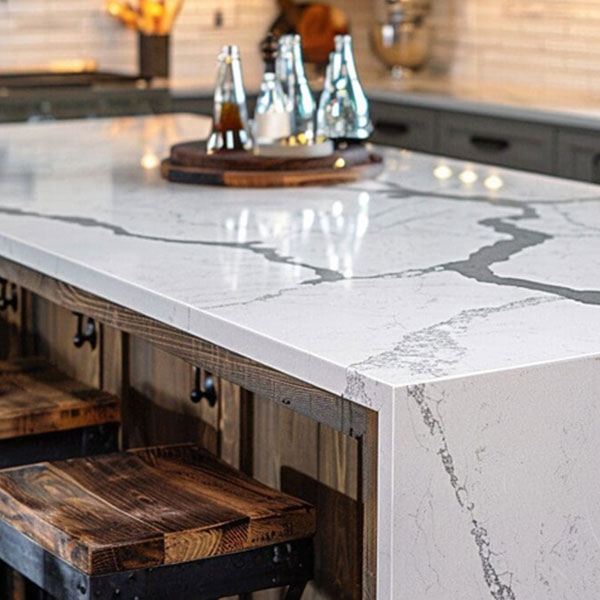
Granite
Natural igneous stone cut into slabs — each slab is unique, with natural veining, flecks and color variations.
- Natural character & uniqueness. Each slab is one-of-a-kind.
- Excellent heat resistance and toughness. Great for heavy cooking and family kitchens.
- Longevity. With periodic sealing, granite can last for decades and can be resurfaced if needed.
Traditional or statement kitchens, high-use cooking areas, island focal points.
Natural pores require periodic sealing to resist staining; color and pattern variability mean you should select slabs in person. Routine cleaning with mild detergent and occasional sealing keeps granite performing and looking its best.
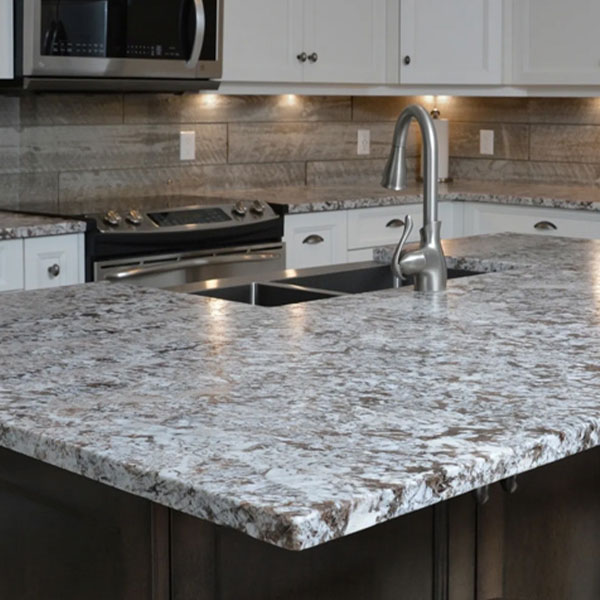
Marble
A classic natural stone known for soft veining and luminous surfaces marble is prized for its timeless, luxurious appearance.
- Timeless luxury & unique veining. Marble’s dramatic, soft veining creates an elegant, high-end look that never goes out of style.
- Aesthetic impact for feature spaces. Marble is a favorite for islands, bathroom vanities and backsplashes where its pattern becomes a centerpiece.
Powder rooms, vanity tops, baker’s counters (for rolling dough), and statement islands.
Marble is more porous and softer than many other stones: it scratches and etches from acidic substances and often requires more protection and careful maintenance. Avoid acidic cleaners, blot spills quickly, and consider honed finishes or protective sealers.
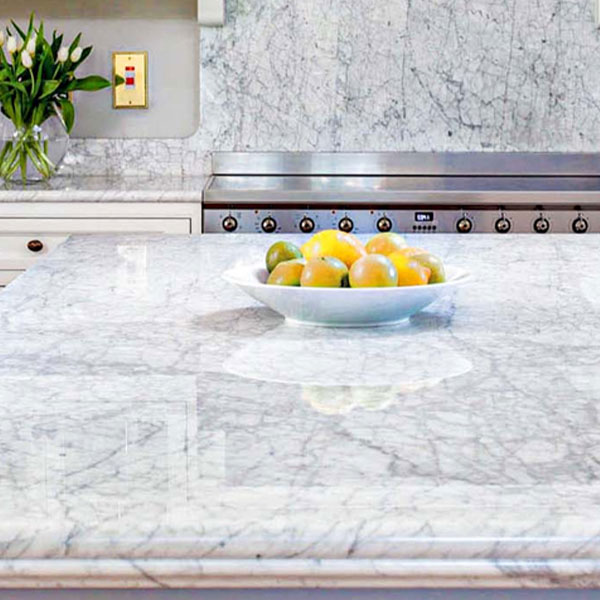
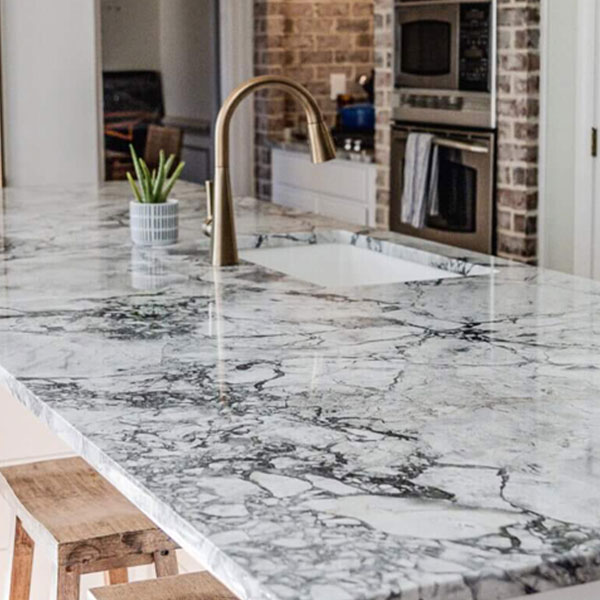
Quartzite
A natural stone formed from sandstone, quartzite offers marble-like patterns with the strength and hardness closer to granite.
- High durability with natural beauty. Quartzite combines refined marble-like veining with superior resistance to heat and scratching — ideal when you want both luxury and practicality.
- Versatility. Quartzite can be used for islands, countertops, backsplashes and even outdoor kitchens (when properly finished and sealed).
High-use kitchens that need a showstopping slab; outdoor applications when finished and sealed as recommended.
Can be expensive; sealing is typically recommended to protect against staining. Clean with mild soap and reseal per fabricator guidance.
Porcelain (Ultra-compact surfaces)
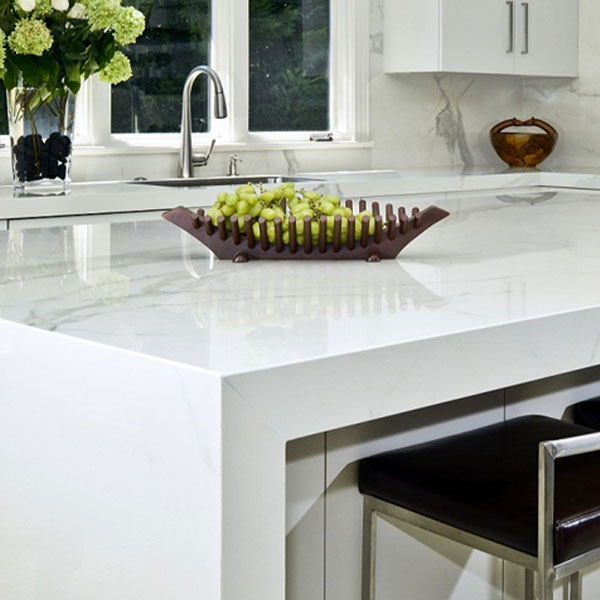
Large-format porcelain slabs and ultra-compact engineered surfaces (sintered or ceramic) deliver very thin, very hard, non-porous panels.
- Extraordinary technical performance. Highly heat-, scratch- and UV-resistant — works indoors and outdoors.
- Low maintenance & hygiene. Non-porous and easy to clean; ideal for food-prep areas.
- Sleek, modern look. Slim profiles and large slabs enable near-seamless surfaces with contemporary edges.
Outdoor kitchens, commercial settings, and minimalist modern interiors.
Edge detailing and fabrication require skill; use a qualified fabricator for complex edges and thin profiles. Clean with water and mild detergent.
Remnants
Leftover or cut pieces from slab yards and fabricators. Remnants include granite, quartz, marble and porcelain offcuts.
- Value & sustainability. Remnants offer premium materials at a lower cost and reduce waste.
- Speed & availability. Remnants are on hand and often let projects move faster than waiting for slab orders.
Small islands, bathroom vanities, wet bars, window sills or accent surfaces — excellent when size and vein matching fit the piece.
How we help you choose
- Samples. We encourage bringing material samples home so you can see the material with your cabinetry and lighting.
- Fabrication & templating coordination. We coordinate slab layout, seam placement, polishing and templating so countertops and cabinets meet precisely at installation.
- Brand & material advice. For branded quartz (Cambria, Caesarstone), porcelain (MSI) or specialty stones, our partners provide product support, warranties and design guidance.
Quick Comparison
| Material | Appearance | Durability | Maintenance | Best For |
|---|---|---|---|---|
| Quartz | Engineered; consistent or marble-like | Very good; resists stains | Low — non-porous | Busy kitchens, islands, bathrooms |
| Granite | Natural; unique slabs | Excellent; heat-resistant | Medium — periodic sealing | High-use kitchens, statement islands |
| Marble | Elegant, veined | Medium — softer | High — careful cleaning & protection | Feature islands, bathrooms, baker’s counters |
| Quartzite | Natural; marble-like but harder | Excellent — heat & scratch resistant | Medium — sealing advised | Luxury kitchens, outdoor (when sealed) |
| Porcelain / Ultra-compact | Thin slabs; modern | Excellent — heat/UV/scratch resistant | Very low | Outdoor kitchens, modern minimalist kitchens |
| Cambria (Quartz) | Branded quartz designs | Very good; warranty-backed | Low | Buyers seeking brand assurance |
| Remnants | Varies | Varies | Varies | Small projects & budgets |
(Use the table as a quick on-site comparison. Exact durability and maintenance depend on finish and fabricator recommendations.)
Practical selection & planning tips
- Bring samples home. View materials in your lighting — what reads as perfect in the showroom can look different at home.
- Decide edge profile early. Thin/slim edges suit porcelain and modern kitchens; thicker eased edges suit traditional kitchens.
- Pick your slab first. For natural stone, choose the slab and then template to control seam placement and vein matching.
- Coordinate sinks & appliances. Undermount vs apron vs integrated affects the edge and installation.
- Budget vs performance. Porcelain and quartzite can be higher cost; quartz and remnants provide ways to manage budget.
Areas We Serve
Kitchen Designs Group is proud to serve homeowners throughout the Southeastern United States, with many cabinetry projects in:
- Marietta, Georgia and the greater Atlanta Metro
- Santa Rosa Beach, Florida
- Panama City Beach, Florida
- Nashville, Tennessee
- Augusta, Georgia
- Dallas, Texas
- Austin, Texas
- North Carolina
- South Carolina
- Alabama
If you’re outside those areas, reach out—we may still be able to help or refer you to trusted partners.
Book a Countertop Consult
Schedule a showroom visit or virtual consult. We’ll set up slab viewing, run a visualizer, and produce a templating plan with estimated lead time and fabrication notes.