
Countertops 101
Countertops 101 — Materials, Care & Choosing Guide | Kitchen Designs Group

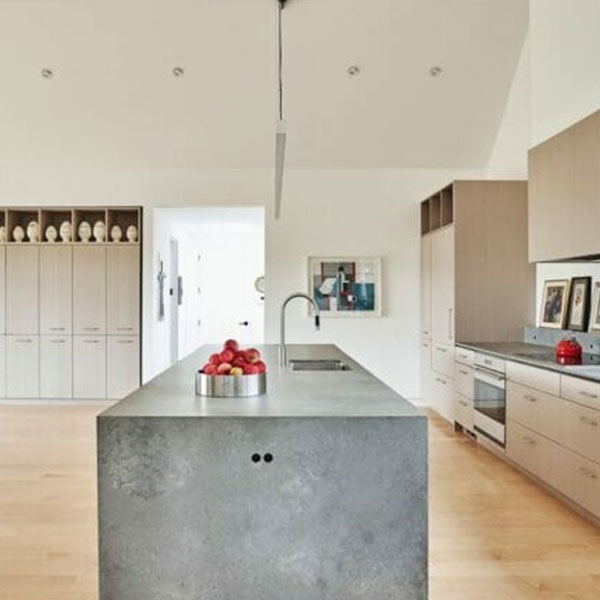
Countertops 101
Practical guidance to help you choose, compare and care for countertop materials.
Countertops 101 — Materials, Care & Choosing Guide | Kitchen Designs Group
This page helps homeowners and designers understand the most common countertop options, weigh pros and cons, learn how to maintain each material, and discover why Cambria is frequently recommended as a premium quartz choice.
Countertop Materials Guide
Quartz (Engineered Quartz)
Overview: Engineered quartz is made from ground quartz mixed with resins and pigments. It’s manufactured to deliver consistent color, strong performance and low maintenance. Partner showrooms promote quartz for its wide palette (from marble-like veining to pure solids).
- Non-porous (usually does not need sealing)
- Strong stain resistance and hygienic surface
- Wide color and pattern choices, consistent across slabs
Granite (Natural Stone)
- One-of-a-kind slab appearance
- High heat resistance and hardness
- Requires periodic sealing (porosity varies by slab)
Marble
- Elegant, high-end aesthetic
- Softer and more porous than granite/quartzite
- Prone to etching from acids (vinegar, lemon)
Quartzite
Overview: A natural stone with marble-like patterns but greater hardness. Quartzite gives that high-end look with better resistance to heat and scratching, making it attractive when both beauty and durability matter.
Key characteristics
- Natural, marble-like veining with granite-level hardness
- Better heat/scratch resistance than marble
- Often requires sealing
Porcelain & Ultra-Compact Surfaces
Key characteristics
- Extremely heat, scratch and UV resistant
- Non-porous and hygienic
- Enables thin edge profiles and large continuous panels
Cambria (Preferred Partner — Quartz)
Key characteristics
- Proprietary color collections and branded design depth
- Manufacturer warranties and care guidance
- Engineered quartz performance (non-porous, low maintenance)
Pros & Cons of Different Countertops
Quartz — Pros: low maintenance, wide color range, non-porous, hygienic. Cons: less heat resistant; seams in large spans; premium styles cost more.
Granite — Pros: natural uniqueness, heat resistance, longevity; Cons: requires sealing, slab variability (must select in person), heavier (structural considerations).
Marble — Pros: timeless elegance, beautiful veining; Cons: softer, porous, etches from acids — higher maintenance and care.
Quartzite — Pros: marble-like look with greater hardness and heat resistance; Cons: can be expensive, sealing is recommended.
How to Maintain & Care for Your Countertops
- Wipe daily with a soft cloth and mild, pH-neutral soap. Avoid harsh abrasives.
- Use cutting boards and trivets; even the hardest stones benefit from protection against sudden thermal shock or heavy impacts.
- Blot spills quickly (don’t rub) — this prevents staining and allows correct cleaning approaches.
- Confirm manufacturer care instructions for engineered surfaces (brands like Cambria and Caesarstone publish care guides).
Material-specific guidance
Quartz / Cambria
- Cleaning: mild dish soap and water or manufacturer cleaner. Avoid abrasive or high-pH cleaners.
- Heat: avoid placing hot pans directly — use trivets.
- Repair: minor scratches or chips can often be repaired by professionals; follow brand warranty for guidance.
Granite
- Cleaning: mild soap/water; avoid acidic cleaners.
- Sealing: reseal frequency depends on porosity — fabricator will advise. Granite can be resurfaced by professionals to restore polish and reduce staining.
Marble
- Cleaning: only pH-neutral cleaners; avoid acids (vinegar, lemon). Blot spills immediately.
- Protection: use sealers and consider honed finishes if you want a less shiny look that masks scratches. Professional honing restores surfaces from etch marks.
Quartzite
- Cleaning & sealing: similar to granite — seal as recommended and use mild soap.
- Durability: very good against heat and scratches but still needs reasonable care.
Porcelain / Ultra-compact
- Cleaning: water and mild detergent. Highly resistant to stains, heat and UV.
- Edge work: ensure the fabricator is experienced with thin edges and joined seams.
- Chips & edge damage: Repair with color-matched epoxy/resin by professionals.
- Seam rework: If seams separate or filler discolors, professional seam rework and re-polish are needed.
- Deep scratches / etches: Marble and some natural stones can be honed and re-polished; quartz generally requires surface replacement for very deep damage.
Consider an annual check: sealing validation for stone, polish refresh and inspection of seams and sinks. Preventive maintenance reduces major restoration costs later. Our Partners note resurfacing granite is often more sustainable than replacement.
Areas We Serve
Kitchen Designs Group is proud to serve homeowners throughout the Southeastern United States, with many cabinetry projects in:
- Marietta, Georgia and the greater Atlanta Metro
- Santa Rosa Beach, Florida
- Panama City Beach, Florida
- Nashville, Tennessee
- Augusta, Georgia
- Dallas, Texas
- Austin, Texas
- North Carolina
- South Carolina
- Alabama
If you’re outside those areas, reach out—we may still be able to help or refer you to trusted partners.
Why Choose Cambria?
Cambria is a leading American quartz brand strongly recommended by Kitchen Designs Group and partner showrooms as a preferred partner. The reasons:
- Design depth & variety: Cambria develops signature designs and calibrated veining that mimic natural stone or deliver contemporary solids. Customers who want marble-like aesthetics with engineered performance often select Cambria.
- Performance & care: As an engineered quartz, Cambria is non-porous and low maintenance. It resists staining and bacterial growth and only requires routine cleaning. Follow Cambria’s care guidance for best results.
- Manufacturing & warranty: Cambria’s manufacturing and brand reputation allow showroom purchasers to get consistent slabs, documented warranties, and reliable product support. This is valuable for homeowners who want brand assurance and clear warranty coverage.
- Partner support & availability: Because Cambria is a widely distributed brand, our partners can often source Cambria designs reliably and provide product support from templating through installation. This makes procurement, fabrication and warranty navigation seamless for the homeowner.
FAQ
A: Engineered quartz (including Cambria) or granite — quartz for lowest maintenance, granite if you need higher heat resistance and prefer natural stone.
Q: How often should I reseal my granite?
A: It depends on the slab porosity and use — fabricators commonly recommend checking annually and resealing as needed. Professional tests can gauge soil absorption.
A: Yes. Porcelain and other ultra-compact surfaces offer UV and heat resistance that make them suitable for outdoor kitchens.
Q: Should I pick my slab before templating?
A: For natural stone, yes — slab selection precedes templating so seam placement and vein matching are controlled. For quartz, color consistency may allow more flexibility. Our templating process and fabrication coordination are designed around a slab-first workflow.
Book a Countertops 101 Consult
Want the full guide? Book a Countertops 101 consult — we’ll bring sample swatches, run a visualizer, and create a templating checklist so you can plan with confidence.